Cliff Diving at Porto Limnionas — The West Coast’s Open-Air Thrill
No instructor, no booking, no equipment hire, no safety briefing. Just limestone, turquoise water, and the decision of whether you’re going to jump. Porto Limnionas’ natural rock formations have been serving as improvised diving platforms since before anyone thought to give the activity a name, and the tradition continues with daily enthusiasm from a rotating cast of local teenagers, visiting adrenaline seekers, and the occasional overly ambitious middle-aged tourist who immediately regrets choosing the 8-metre ledge.
The Location
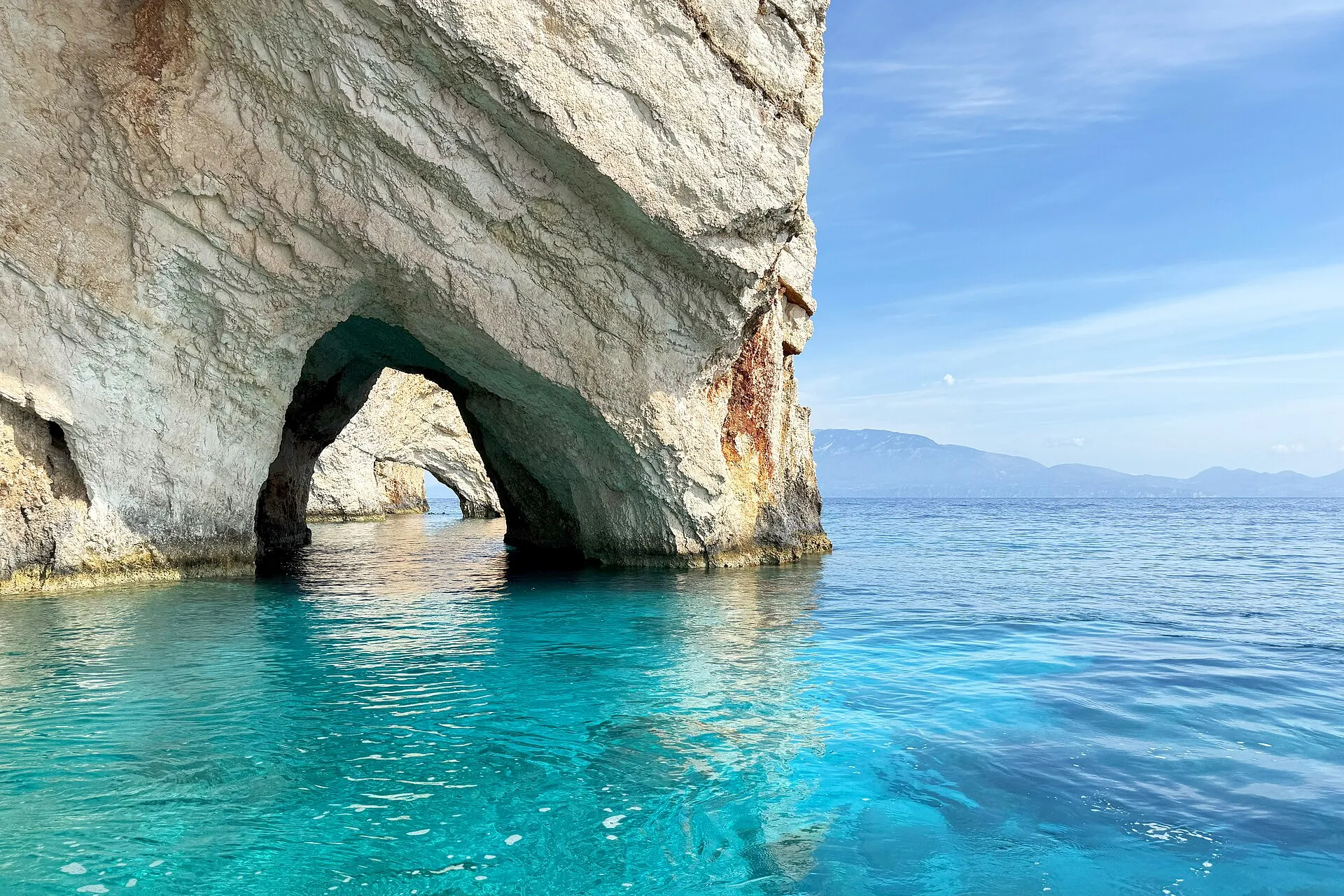
Porto Limnionas is a narrow geological inlet on Zakynthos’ western coast — a crack in the limestone cliffs where the sea pushes in and the water turns from Ionian blue to the kind of translucent teal that makes people check their camera settings. The walls of the inlet rise steeply on both sides, and the rock is layered in the stepped formation that makes natural diving platforms.
The depth at the base of the inlet is sufficient for jumping at all the accessible ledges — the water is consistently 8–12 metres deep in the jumping zones, and locals have been confirming this for generations. The clarity is extraordinary; you can see the bottom from the surface, which is both reassuring and slightly terrifying from height.
The Ledges
There are three main jumping points, ranging from casual to consequential:
The 3-metre shelf (right side of the inlet, accessible directly from the concrete path): The beginner’s entry. A broad, flat ledge, well-worn, with an easy climb back out via the iron rungs sunk into the rock over the years. Good for testing whether you actually enjoy this before committing to more.
The 6–7-metre platform (south wall, accessed by a short scramble): More commitment required — both to get up and to jump off. The view from here includes the whole inlet and, if you time it right, a taverna table full of people watching you with varying expressions. The drop feels longer than the number suggests.
The 12-metre north wall ledge (the serious one): Accessed by swimming to the far end of the inlet and climbing a rock face that’s worn smooth by decades of use. The 12-metre height is approximate — locals argue about the exact measurement but agree it’s enough to create genuine respect in anyone standing on it. The water entry requires slightly left-of-centre trajectory to avoid a submerged rock feature. Know before you go.
What to Know Before You Jump
There are no official safety measures here. No lifeguard, no staff, no liability. The risk management is entirely yours. That said, people have been jumping here for decades without significant incident because the basic physics are sound and the water is deep enough. What catches out newcomers:
Check the landing zone from water level before climbing. Swim the area, assess the depth, note the rocks at the perimeter.
Feet first, always. The water depth is generous but not infinite. Flat-out dives from height require specific entry angle knowledge that most tourists don’t have.
Don’t jump if sea conditions are rough. A slight ocean swell turns the inlet entrance from calm to chaotic. Check the wider sea state before committing.
Wear water shoes for the scramble. The rock is slippery in places and sharp in others.
The Social Experience
Part of what makes Porto Limnionas genuinely enjoyable is the atmosphere — the informal community of people at various stages of the decision-making process. Someone always eggs someone else on. Someone always regrets it and then immediately climbs back up. The taverna terrace above provides a well-fed and occasionally wine-warmed audience. It’s participatory theatre with a 12-metre ceiling.
Go in the morning for calmer water and better company. Go in July for the full summer energy. Go in September when the water is warm and the crowds have thinned. Go any time that isn’t a winter storm.