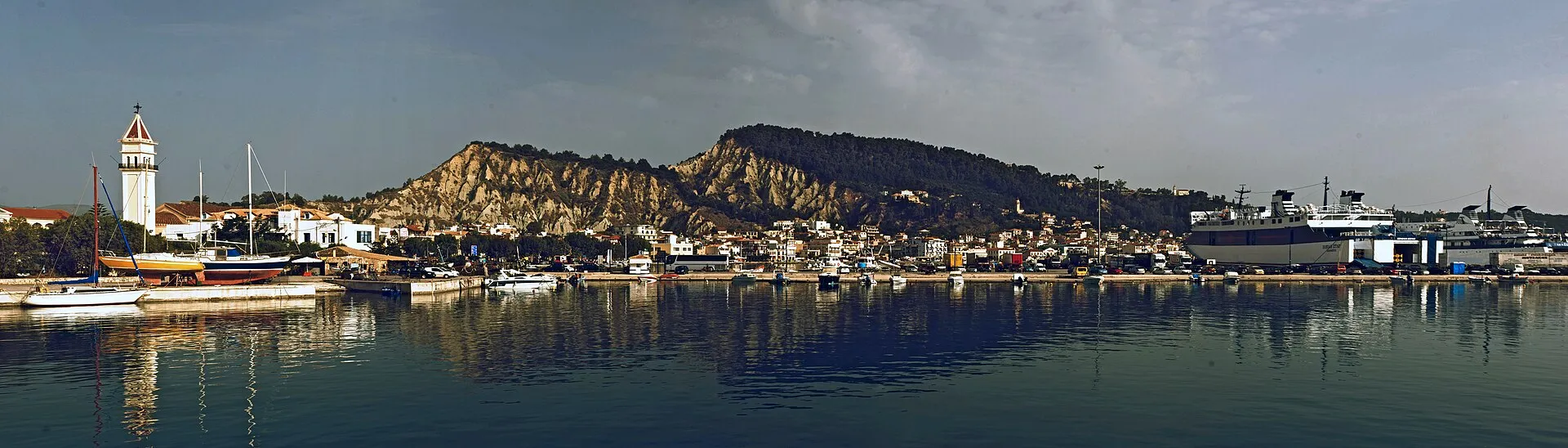
Keri — The End of the Road and the Edge of the World
The road from Zakynthos Town to Keri goes inland first, climbing through the vine-covered slopes of the Keri Lake basin before ascending the southern massif to the village itself. At 240 metres elevation, Keri sits on the edge of the island’s southwestern cliffs, and from its narrow main street you can look out over thirty kilometres of open Ionian towards nothing in particular. The feeling is appropriately end-of-the-world.
Not many tourists make it here. The ones who do tend to stay in the south for the beaches (Keri beach, Marathonisi) and don’t bother with the village twenty minutes up the hill. This is their loss and the village’s saving grace.
The Village
Keri has a population of about 680, though that number falls significantly in winter when the seasonal workers leave and the village returns to its agricultural core. The main square has a church, a kafeneion (traditional coffee house), and a fountain. The kafeneion has been in the same family for three generations, serves coffee, ouzo, and local wine, and does not have an English menu. This is not a problem if you point and smile.
The village is known for its Avgoustiatis wine — a local red grape variety found almost nowhere else in Greece, producing wines that are dark, tannic, and earthy in a way that pairs perfectly with the grilled lamb and roasted vegetables that the local taverna makes. Buy a bottle from the small cooperative on the main road; the label is functional, the content is excellent.
The Lighthouse
The Keri Lighthouse sits two kilometres west of the village on a road that passes through an increasingly sparse landscape of scrubby maquis and limestone outcrops. Built in 1916, it’s an operational lighthouse — the light still warns ships away from the southwestern tip’s rocks — surrounded by a small keeper’s complex that has been converted into a café with a terrace view straight west over open ocean.
Sunsets from the lighthouse terrace are among the best on the island. There are no cliffs in the way, no headlands blocking the horizon — just the lighthouse, the sea, and whatever light show the Ionian decides to stage that evening.
The insider detail: follow the dirt track past the lighthouse for 800 metres. It ends at a stone bench perched at the cliff edge above a 200-metre drop to the sea. No fence, no café, no other people. This is the best sunset seat on Zakynthos, and almost nobody knows it exists.
The Keri Caves
From Keri beach (20 minutes by foot from the village or a quick drive), small boats run to the Keri Caves — a system of sea arches and small caverns carved into the limestone cliffs of Cape Keri. These are less dramatic than the Blue Caves in the north, smaller in scale, but much less visited and accessible on a more intimate scale.
The caves include several arched passages you can swim through, a small cave with an air pocket where sound reverberates impressively, and a series of ledges used by cliff jumpers. Boat tours depart when enough people gather — there’s no fixed schedule. Alternatively, rent kayaks from the beach kiosk and reach the caves under your own paddle power in about 20 minutes.
The Keri Lake
Below the village, before the road climbs to the coast, Keri Lake is a natural saltwater lagoon connected to the sea by underground channels. It’s known in ancient sources — Herodotus mentioned the natural bitumen deposits here, which were used for waterproofing boats in antiquity. Today it’s a quiet birdwatching area with herons, egrets, and migrating waders in spring and autumn. Completely ignored by most visitors. Bring binoculars.
Wine and Tradition
Keri’s Avgoustiatis grape is a story worth knowing. When phylloxera devastated European vineyards in the 19th century, Zakynthos lost most of its wine culture. The Avgoustiatis survived in the southern hills because of the specific soil conditions and the isolation of the plateau — too steep and remote for the replanting that brought Muscat back to Laganas. The variety was nearly lost entirely; a handful of local families kept it alive. The wine you drink in Keri’s kafeneion is the direct result of that stubbornness.
Getting There
Keri is 18 kilometres from Zakynthos Town — roughly 25 minutes by car via the inland mountain road. There is no public bus service. The road is good for most of its length; the final section into the village is narrow. Park on the approach and walk the last 200 metres if the street looks tight.